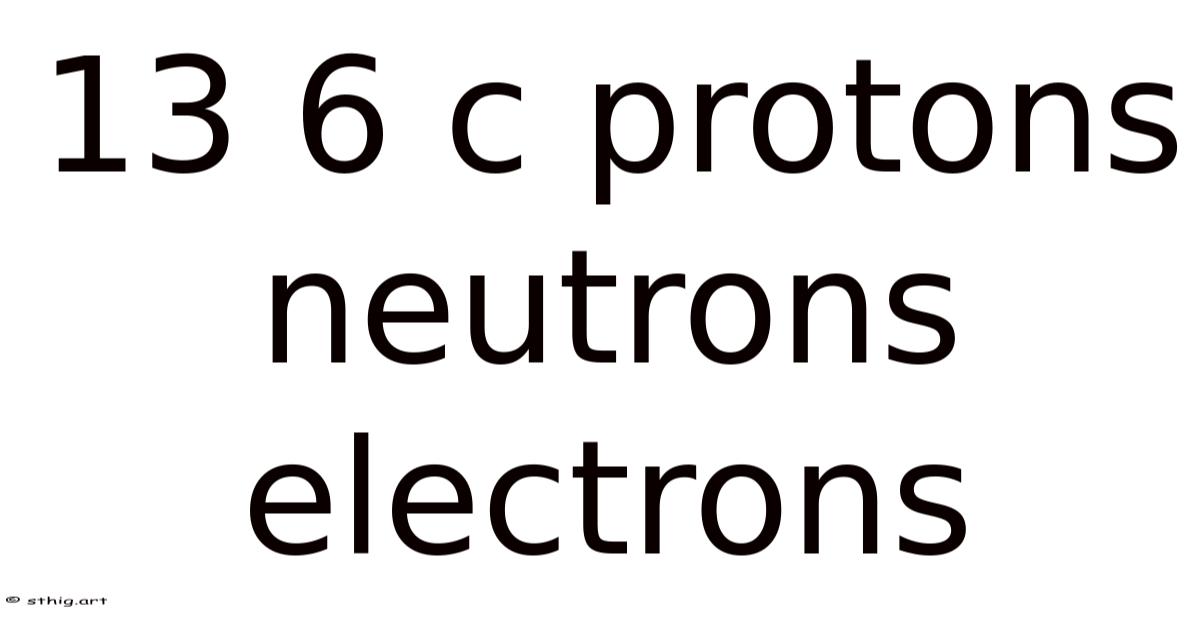
What Are Protons, Neutrons, and Electrons?
Here’s the thing: when you hear terms like protons, neutrons, and electrons, it’s easy to think of them as abstract science concepts. But in reality, they’re the building blocks of everything around you. Now, your phone, your coffee mug, even the air you breathe—all made of atoms, and atoms are made of these three particles. But what exactly are they? Let’s break it down.
Protons and neutrons live in the nucleus of an atom, which is like the dense core of a tiny universe. And electrons, on the other hand, zoom around the nucleus in what’s called an electron cloud. Which means think of the nucleus as the sun and the electrons as planets orbiting it, though that’s a simplification. Bottom line: that protons carry a positive charge, neutrons have no charge, and electrons are negatively charged. These charges matter because they determine how atoms interact with each other Simple as that..
Why does this matter? Because the number of protons defines what element an atom is. Here's one way to look at it: if an atom has six protons, it’s carbon. Which means add or remove protons, and you’ve got a different element entirely. Neutrons, while neutral, add mass to the atom and influence its stability. Electrons, with their negative charge, are responsible for chemical reactions—like why salt dissolves in water or why metals conduct electricity.
So, protons, neutrons, and electrons aren’t just textbook terms. They’re the reason atoms stick together, break apart, and form the materials that shape our world And that's really what it comes down to..
The Role of Protons in Defining Elements
Let’s zoom in on protons. Plus, these positively charged particles are the stars of the atomic world. Why? Because the number of protons in an atom’s nucleus determines what element it is. This number is called the atomic number, and it’s like a fingerprint for elements. Worth adding: for instance, every carbon atom has six protons, every oxygen atom has eight, and every gold atom has 79. Change the number of protons, and you’ve got a different element.
You'll probably want to bookmark this section.
But here’s the kicker: protons aren’t just passive players. They’re what hold the atom together. The positive charge of protons repels other protons, but the nucleus stays intact because of the strong nuclear force—a powerful attraction that overcomes this repulsion. Without protons, atoms wouldn’t exist, and without atoms, there’d be no matter as we know it.
Quick note before moving on.
Neutrons, meanwhile, are like the glue that keeps the nucleus stable. This balance between protons and neutrons determines whether an atom is stable or radioactive. To give you an idea, carbon-12 has six protons and six neutrons, making it stable. Because of that, they don’t carry a charge, so they don’t repel each other, but they add mass to the atom. Carbon-14, with six protons and eight neutrons, is radioactive and decays over time.
So, protons aren’t just about defining elements—they’re the foundation of atomic structure and the reason elements behave the way they do.
The Importance of Neutrons in Atomic Stability
Now, let’s talk about neutrons. Think of them as the silent partners in the atomic world. That said, these neutral particles might not have a charge, but they’re critical to an atom’s stability. While protons are busy defining what an element is, neutrons are the ones that keep the nucleus from flying apart And that's really what it comes down to..
Here’s how it works: protons, with their positive charges, repel each other. If there weren’t enough neutrons to balance that repulsion, the nucleus would disintegrate. Neutrons, being neutral, don’t add to that repulsion. Here's the thing — instead, they help hold the nucleus together through the strong nuclear force. This force is so powerful that it overcomes the electrostatic repulsion between protons, keeping the nucleus intact.
But it’s not just about stability. Neutrons also influence the mass of an atom. Because of that, since they’re about the same size as protons, they add to the overall weight of the atom. As an example, carbon-12 has six protons and six neutrons, while carbon-14 has six protons and eight neutrons. This is why isotopes—atoms of the same element with different numbers of neutrons—have different masses. The extra neutrons in carbon-14 make it heavier and, as a result, radioactive.
Without neutrons, atoms would be unstable, and the elements we rely on—like oxygen, hydrogen, and iron—wouldn’t exist in their current forms. Neutrons aren’t just passive participants; they’re the unsung heroes of atomic structure Practical, not theoretical..
The Electron’s Role in Chemical Reactions
Electrons are the tiny, buzzing particles that orbit the nucleus, and they’re the reason atoms form bonds and react with each other. Which means this movement isn’t random, though. So naturally, unlike protons and neutrons, which are stuck in the nucleus, electrons are in constant motion, zipping around the nucleus in what’s called an electron cloud. Electrons occupy specific energy levels, or shells, around the nucleus, and their arrangement determines how an atom interacts with others.
The key to chemical reactions lies in the electrons’ negative charge. Since opposite charges attract, electrons are drawn to protons in other atoms. Here's one way to look at it: when sodium and chlorine react, sodium’s outer electron is transferred to chlorine, creating sodium ions (Na⁺) and chloride ions (Cl⁻). This attraction is what allows atoms to form bonds. These ions then form a stable ionic bond, resulting in table salt (NaCl) Took long enough..
But it’s not just about transferring electrons. The number of electrons in an atom’s outer shell also determines its reactivity. Atoms with full outer shells, like noble gases, are generally unreactive because they don’t need to gain or lose electrons. Still, on the other hand, atoms with incomplete outer shells, like oxygen or hydrogen, are more likely to react. This is why elements like oxygen are so reactive—they’re eager to gain electrons to fill their outer shell.
So, electrons aren’t just tiny particles darting around an atom. They’re the driving force behind chemical reactions, shaping the way elements combine and interact. Without them, the world of chemistry would be a lot less dynamic.
Common Mistakes and Misconceptions About Protons, Neutrons, and Electrons
Let’s be real—understanding protons, neutrons, and electrons can be confusing, and it’s easy to mix them up. One of the most common mistakes is confusing the roles of protons and neutrons. On top of that, while protons define the element, neutrons are often overlooked. Some people think neutrons are just “extra stuff” in the nucleus, but they’re actually crucial for stability. Without enough neutrons, the nucleus would be too unstable to exist.
Another misconception is that electrons are just “floating around” the nucleus like tiny planets. Even so, in reality, electrons exist in probability clouds, not fixed orbits. This means their exact position is hard to predict, which is why quantum mechanics is so complex. But for most practical purposes, we can think of electrons as being in specific energy levels around the nucleus.
This is where a lot of people lose the thread.
There’s also a tendency to think that all atoms have the same number of neutrons. But isotopes—atoms of the same element with different numbers of neutrons—are a perfect example. Worth adding: that’s not true. Carbon-12 and carbon-14 are both carbon, but they have different numbers of neutrons, which affects their stability and behavior.
And let’s not forget the confusion around atomic mass. The atomic mass of an element is the sum of protons and neutrons, but people often forget that electrons contribute almost nothing to the mass. This can lead to errors when calculating the mass of an atom.
These mistakes aren’t just academic—they can lead to misunderstandings in chemistry, physics, and even everyday life. So, it’s worth taking the time to clarify these concepts.
Practical Tips for Understanding Atomic Structure
Understanding protons, neutrons, and electrons isn’t just for scientists—it’s a skill that can help you make sense of the world around you. Start by visualizing the atom. Imagine the nucleus as a tiny, dense core, with protons and neutrons packed tightly together. Then picture electrons zipping around it in invisible paths. This mental image can help you grasp how these particles interact.
Quick note before moving on Worth keeping that in mind..
Another tip is to use real-world examples. Practically speaking, it’s because iron atoms lose electrons, forming ions that react with oxygen. As an example, why does iron rust? Consider this: think about how elements behave. Or consider how a battery works—electrons flow through a circuit, powering devices. These examples make abstract concepts more tangible.
Practice is
Practice is essential. Label the particles and their charges. Try drawing atoms of different elements—start with hydrogen (one proton, one electron), then helium (two protons, two neutrons, two electrons), and work your way up. Here's the thing — this hands-on approach reinforces the relationship between particle count and elemental identity. Online simulations and interactive periodic tables are also fantastic tools; they let you build atoms, observe isotope variations, and see how electron configuration dictates chemical bonding in real time.
Don't shy away from the math. In practice, calculating the number of neutrons (Mass Number minus Atomic Number) or determining the charge of an ion (Protons minus Electrons) turns abstract concepts into concrete problem-solving skills. The more you manipulate these numbers, the more intuitive the structure of matter becomes.
The Big Picture: Why It All Matters
At this point, you might wonder why we invest so much effort into particles we can't even see. The answer is simple: everything is made of them. The screen you're reading this on, the air you breathe, the water you drink, and the very cells composing your body—all are vast assemblies of protons, neutrons, and electrons governed by the rules we've discussed Easy to understand, harder to ignore. Took long enough..
The number of protons dictates the element; the number of neutrons governs nuclear stability and gives us tools like radiocarbon dating and nuclear energy; the arrangement of electrons drives every chemical reaction, from the combustion in an engine to the enzymatic reactions keeping you alive. Mastering the basics of atomic structure isn't just about passing a test—it's about acquiring the fundamental vocabulary of the physical universe.
Conclusion
We began with three particles: the positively charged proton, the neutral neutron, and the negatively charged electron. We saw how they congregate in a minuscule nucleus and a sprawling electron cloud, how their numbers define the periodic table, and how their interactions write the script for all of chemistry and much of physics Simple as that..
The journey from Democritus’s indivisible atomos to the quantum mechanical model is one of humanity's greatest intellectual achievements. But yet, the framework remains elegantly accessible. Protons give identity. Neutrons give stability. Electrons give personality—reactivity, bonding, light, electricity, life.
So, the next time you hold a metal spoon, watch a fire burn, or simply take a breath, remember the silent, ceaseless dance of these three particles. Understanding them doesn't diminish the wonder of the world; it deepens it, revealing the profound simplicity underlying the infinite complexity of matter.
